
Why Enterprise FMS is Overkill for small mines
The mining fleet management software market has a problem: it was built for the biggest players. Enterprise FMS platforms are powerful, yet they can be ruthlessly over-engineered for the 80% of mining operations that don’t run 200-truck mega-sites.
This paper makes the case that small to mid-tier mining
contractors, multi-location operators, and growing fleets don’t need LESS functionality, they need the RIGHT functionality, delivered simply, affordably, and fast. That’s exactly what SimpleFMS was built to do.
The Problem with Enterprise FMS
Fleet management software has followed the same playbook for decades à build for the largest mines, charge accordingly, and let everyone else struggle. The result is a market dominated by platforms that require:
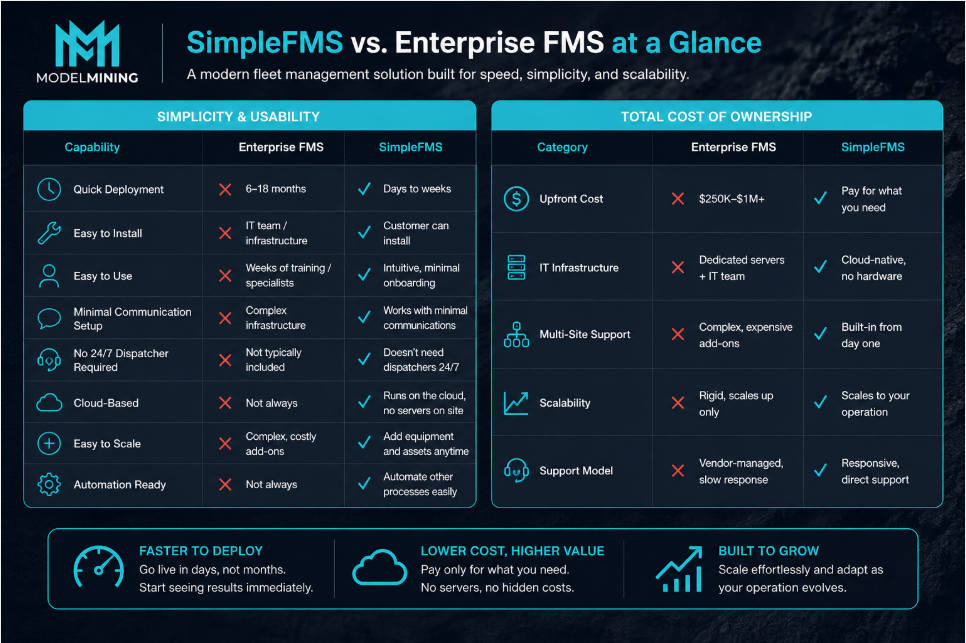
- 6–18 month implementation timelines
- Six- to seven-figure upfront licensing costs
- Dedicated IT infrastructure and on-site servers
- Specialist consultants for ongoing maintenance
- Weeks of staff training before going live
For a 200-person open-cut iron ore operation, that overhead might be justified. For a contractor running just a dozen trucks across a few sites, it’s a deal-breaker.
The real cost isn’t just money, it’s time. Every month spent in implementation is a month operating blind without real-time location data, no automated dispatch visibility, no fleet utilization insight.
Who Actually Needs a Different Approach
SimpleFMS was purpose-built for:
- Multi-site contractors. Mining contractors managing fleets across multiple client sites
- Growing producers. Mid-tier producers with 5–50 vehicles who need visibility without complexity
- Expansion-phase operators. Operations expanding into new geographies and need systems that travel with them
- First-time FMS adopters. Companies replacing spreadsheets and radio check-ins with their first real FMSThese aren’t small businesses.
They’re serious operations with real fleets, real schedules, and real consequences when vehicles go missing, maintenance is missed, or dispatch runs on guesswork. They deserve software that treats them that way.
Four Reasons SimpleFMS Wins for Smaller Operations
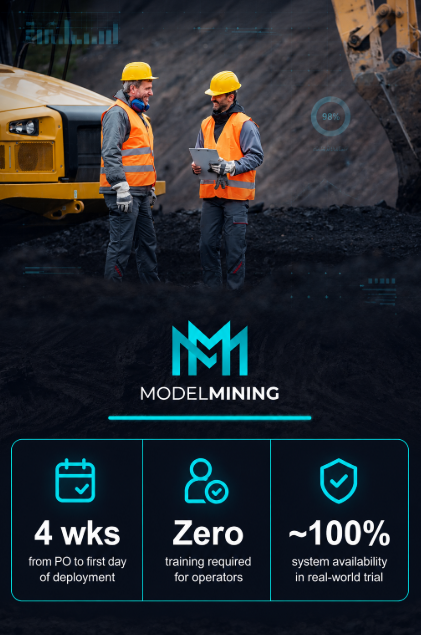
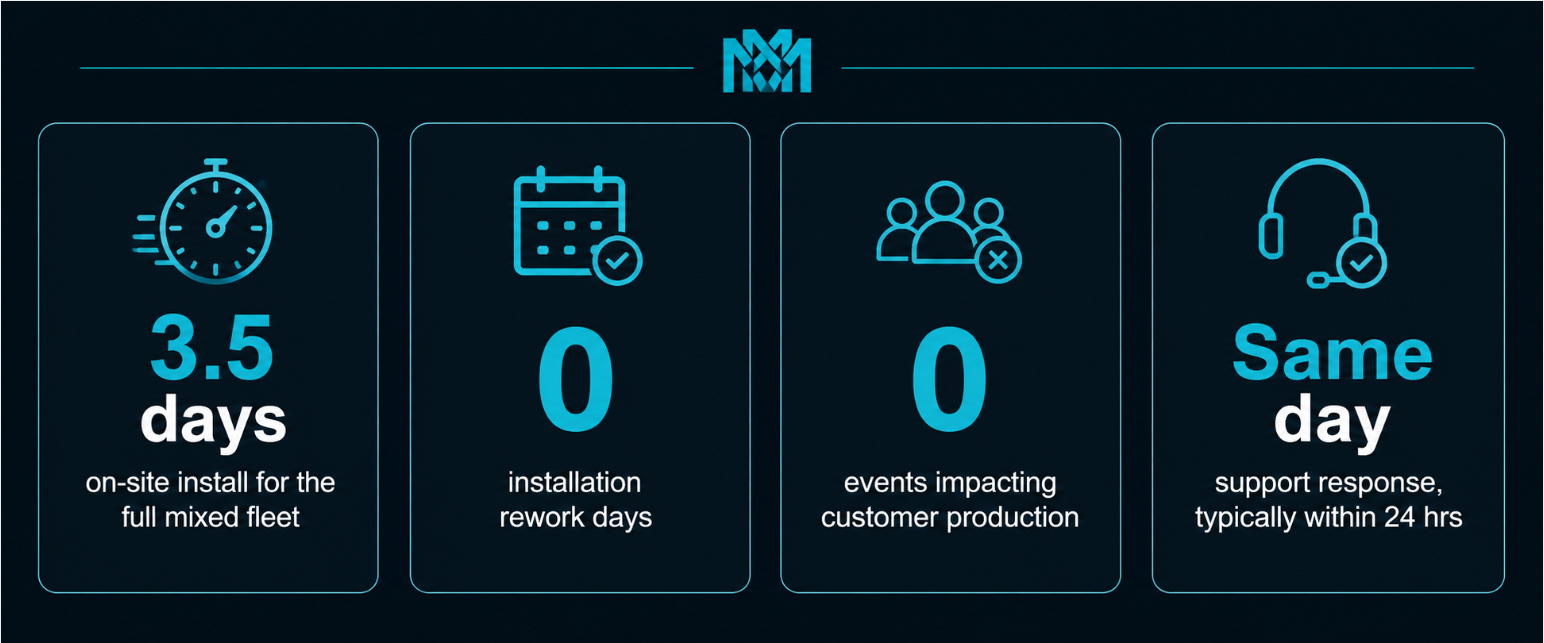
SimpleFMS is cloud-native, with no servers to rack and no six-month onboarding project. In a recent customer trial, SimpleFMS went from purchase order to first day of deployment in 4 weeks. On-site installation of 8 trucks, 2 excavators, and 1 dozer took 3.5 days — with zero rework and zero production-impacting events. A single on-site technician completed the work with remote guidance from Model Mining. For contractors that win short-cycle projects and need to spin up quickly, that’s the difference between bidding and winning.
Enterprise FMS vendors price for enterprise budgets. SimpleFMS is structured around what mid-tier operations actually spend, with transparent, predictable pricing that doesn’t require a procurement team to decode. No hidden implementation fees or surprise charges. The total cost of ownership for SimpleFMS is a fraction of what comparable enterprise solutions cost.
Enterprise FMS platforms are built for dispatch specialists and trained operators. SimpleFMS is built for everyone on site. The interface is intuitive, and features real-time fleet location, vehicle status, and key alerts are visible at a glance without a manual.
This matters because smaller operations don’t always have dedicated dispatch coordinators. Supervisors, site managers, and fleet administrators need to be able to use the system without specialist training. In a recent customer trial, SimpleFMS required zero training for operators and only minimal training for supervisors, crews were running the system from day one.
Managing fleets across multiple locations is where enterprise FMS typically either fails or charges extra. SimpleFMS treats multi-site operations as the default, not an add-on. Contractors can see every vehicle across every site in a single view. They don’t have to switch between modules, buy additional licenses, or deal with configuration headaches.
For contractors whose business model depends on moving people and equipment across client sites, this is the feature that pays for the whole platform.
Proven in the Field
The four reasons above aren’t marketing claims. They’re what SimpleFMS actually delivers in production. In a recent customer trial covering a mixed fleet of 8 trucks, 2 excavators, and 1 dozer, the numbers held up. Check out these REAL numbers from our recent customer trial!
Beyond the install, the system delivered what operators actually need: real-time visibility for both site and corporate stakeholders, equipment utilization based on actual machine movement, and automatic detection of delays — shift change, operator break, standby, no operator, geofence DOWN. Supervisors got a clear picture every shift and could react quickly when the plan changed.
SimpleFMS also adapted to the operation, not the other way around. Custom shift-in-control views were built for the site’s specific workflow. Production projections were based on historical behavior rather than simple linear math — a far more accurate forecast. The system calculated optimal truck count from actual cycle data, dig rates, and travel distances, with average truck queue time of one minute per load. And early detection of unsafe operator behavior, like speeding into the dump zone, helped prevent the kind of incidents that drive maintenance costs through the roof.
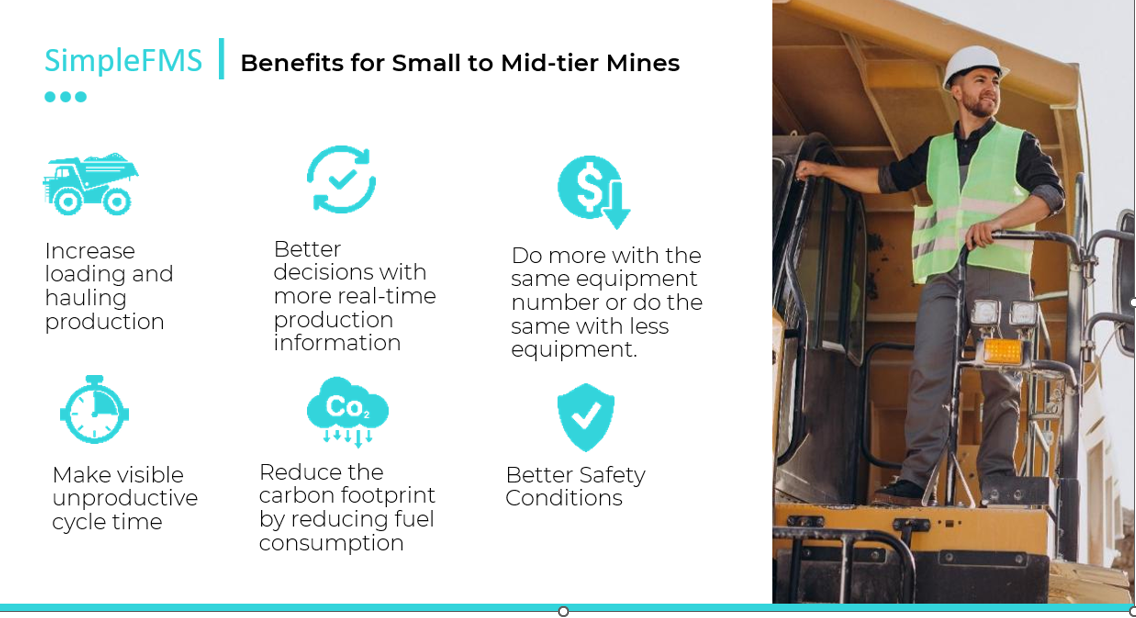
That's right-sized fleet management.
Built for the Underdog
The mining industry runs on contractors, regional producers, and agile multi-site operations that keep projects moving. These are the companies that get the job done, and they’ve been underserved by fleet management software for too long.
SimpleFMS exists to change that. Not by building a cheaper version of enterprise FMS. By building something genuinely better suited to what small to mid-tier mining operations need. Full automation in real-time with zero unnecessary complexity.
Let’s talk about your fleet management challenges and productivity goals
You may be managing a growing operation, but that doesn’t have to mean added complexity. You can also contact us regarding other operational challenges.